Enclosed pod, curtained bunk or cabin — which suits you?
Not all capsules are capsules. The three pod types we label on every listing, what each does to noise and privacy, and how to pick before you book.
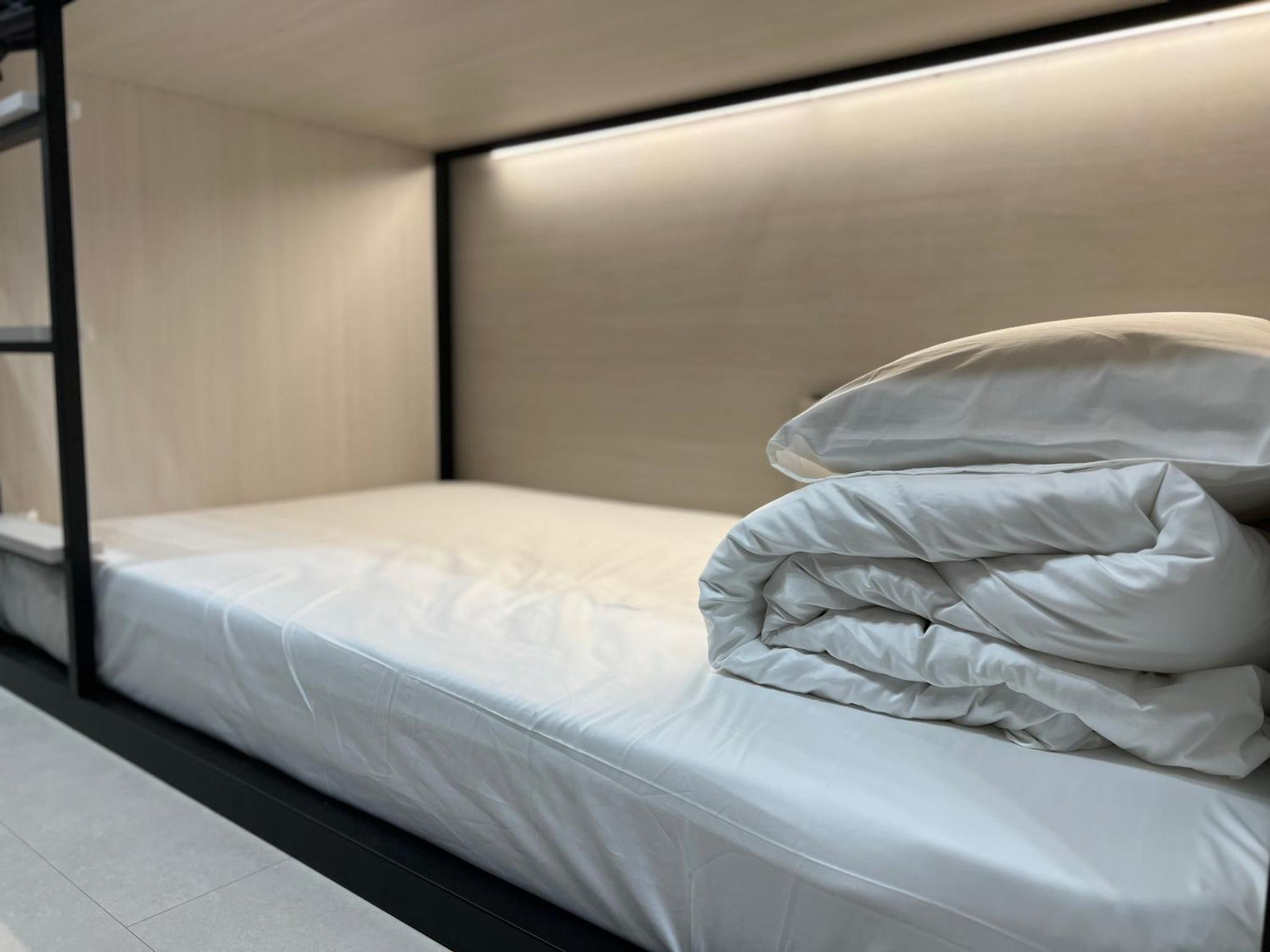
Booking platforms use "capsule" the way menus use "artisanal" — generously. Under the one word sit three quite different pieces of furniture, and the difference decides how well you will sleep more reliably than the review score does. We label every property in the directory with its dominant pod type — across the 299 hotels currently published, that's 174 with enclosed pods, 83 with curtained bunks, and 26 with sleeping cabins. Here is what each one actually buys you.
The enclosed pod
The classic capsule, descended directly from the 1979 Osaka original: a moulded berth with rigid walls, entered from the end or the side, closed with a blind, screen or door. Inside, typically: a mattress the size of a generous single bed, sitting headroom, a light, a fan or air vent, a socket, and a small shelf.
What it does well: light and sightlines. A pod with a rigid shell and a blind is genuinely dark and genuinely private — nobody can see you, brush against your curtain, or shine a phone into your sleep. Hard walls also blunt noise better than fabric, though no capsule is soundproof; the blind is still the acoustic weak point.
What it doesn't: headroom and air. You cannot stand. Ventilation quality varies enormously and is, after noise, the most common complaint we see in pod reviews. If you run hot, look for evidence about airflow in the listing quotes.
Book it if: you are a light sleeper, you value privacy over space, or it is your first capsule and you want the real thing.
The curtained bunk
A bunk bed with a privacy curtain and, usually, a light and a socket — the hostel dorm’s ambitious sibling. Often marketed as a capsule; structurally it is not one, which is exactly why we label it separately.
What it does well: price, air and headroom. Curtained bunks are normally the cheapest option in a city, they breathe better than any enclosed shell, and the format tends to come with more generous mattress widths.
What it doesn't: noise and light. Fabric stops neither. A snorer two bunks away is, acoustically, in bed with you. Reviews of curtained-bunk properties mention noise roughly twice as often as anything else, which is why few of them reach a noise-isolation score of 7 in our analysis.
Book it if: the price gap matters, you sleep deeply, you are mildly claustrophobic, or you travel with earplugs as a matter of policy.
The sleeping cabin
The premium end of the format: a small enclosed box — walls to the ceiling or nearly so, a real door or solid sliding panel — sometimes with a desk, a luggage nook, occasionally a window. First-class-cabin aesthetics are common; so are airport locations, where the cabin format dominates transit hotels.
What it does well: nearly everything a budget room does. You can stand, change, and spend a daytime hour inside without resentment. Cabins also most often escape the midday lockout that pod floors enforce.
What it doesn't: price, and sometimes ceilings. A cabin can cost double a pod, at which point it competes with budget business hotels rather than other capsules — our value-for-money score is the tiebreaker. And where walls stop short of the ceiling for ventilation, the acoustic privacy is closer to a pod than a room.
Book it if: you are staying more than one night, working on the trip, catching a dawn flight, or travelling as a couple wanting adjacent quarters.
The thirty-second decision
- Light sleeper → enclosed pod with a high noise score, or a cabin.
- Tight budget → curtained bunk, plus earplugs.
- Claustrophobic → curtained bunk or cabin, never an enclosed pod with an end entrance.
- More than two nights → cabin, for the daytime access alone.
- First capsule, for the experience → enclosed pod, tier A. Start with the design-led list.
Every listing in the directory shows the pod type next to the tier badge, with the noise, privacy and value evidence quoted underneath. The label is the first thing to check; the noise score is the second.