What is a capsule hotel?
A working definition of the format Osaka invented in 1979 — what a pod actually is, what it costs, who it suits, and how it differs from a hostel dorm with curtains.
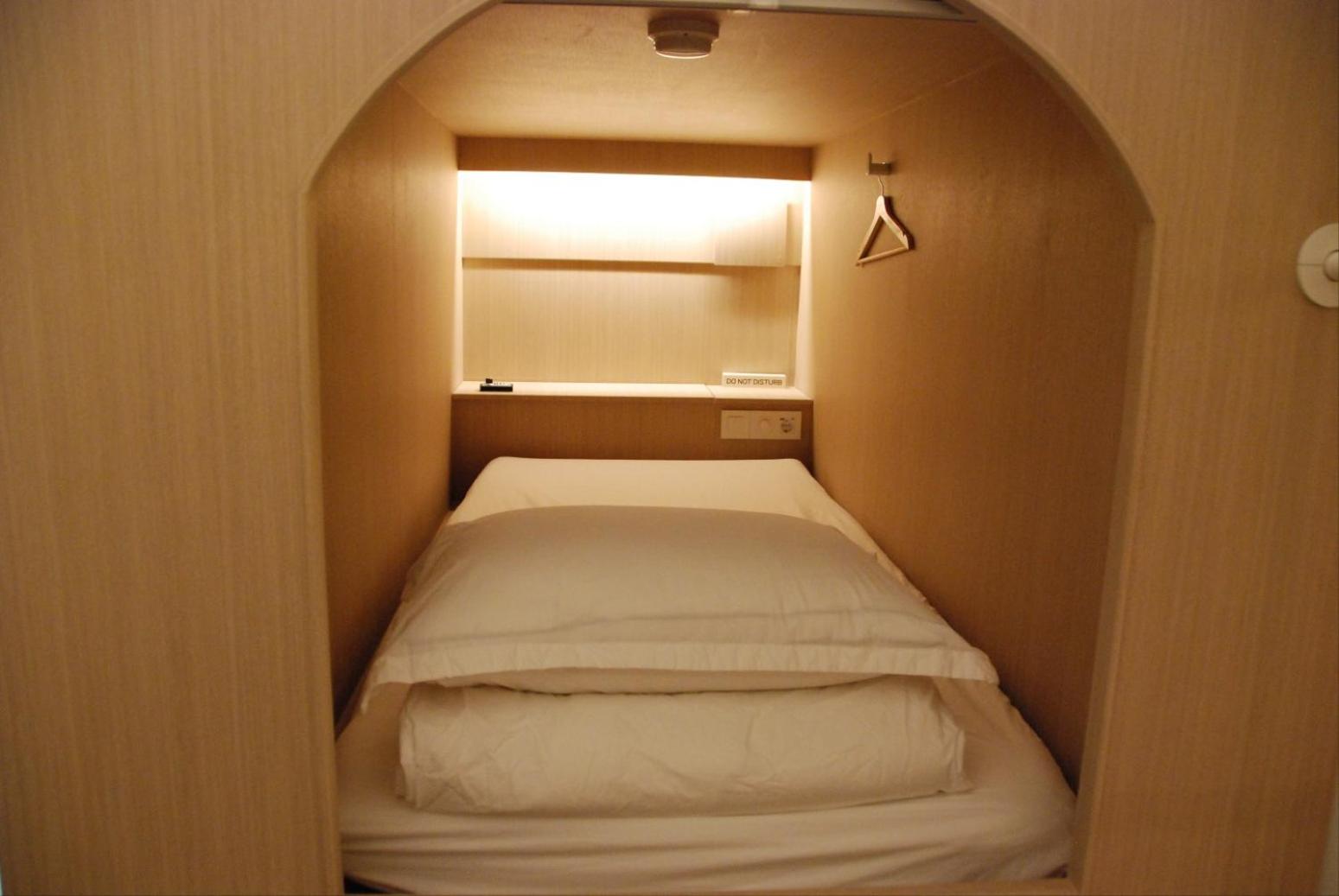
It is 11 p.m. in Tokyo and the last train you meant to catch left twelve minutes ago. You walk into a building near the station, trade your shoes for slippers at a bank of small lockers, and are handed a wristband with a number on it. Four floors up, in a dim corridor that smells faintly of laundry, you find your number: a berth about two metres deep and a metre high, with a mattress, a reading light, a power socket, and a blind you pull down behind you. It costs less than dinner did. You sleep, surprisingly well.
That is a capsule hotel.
The working definition
A capsule hotel is a hotel whose unit of sale is not a room but a pod — an enclosed sleeping berth, sized for one person, stacked usually two high along a corridor. Everything except sleeping is communal: bathrooms and showers are shared, luggage lives in a locker, and there is normally a lounge, sometimes a bathhouse, occasionally a sauna. You give up floor space and get back two things in exchange: a much lower price, and a location you could otherwise not afford — beside the station, inside the terminal, in the middle of the city.
The pod itself is the whole proposition. A good one is clean, dark, ventilated, and quiet enough to sleep in. A bad one is a plastic shelf with a curtain. The difference is rarely visible in the listing photos, which is why this site exists: we read real Booking.com guest reviews — 8,523 of them so far, across 299 properties in 63 cities — and score every hotel on what guests actually report about noise, comfort, cleanliness and value.
Where the format comes from
The first capsule hotel, Capsule Inn Osaka, opened in the Umeda district of Osaka in 1979, designed by the architect Kisho Kurokawa — a leading figure of the Metabolist movement, which had been experimenting with modular living cells for a decade (his Nakagin Capsule Tower in Tokyo predates the hotel by seven years). The original customer was the Japanese salaryman who had missed the last train: a clean, cheap, dignified place to sleep that was not a bench and not a love hotel.
For thirty years the format barely changed and barely left Japan. Then two things happened: budget air travel made Asian city-hopping routine, and a generation of designers realised the pod could be a choice rather than a fallback. The modern capsule hotel — better mattresses, women-only floors, lighting you can actually read by — dates from roughly the 2010s, and the format has since spread to Singapore, Vietnam, Korea, Taiwan, and onwards to Europe and the Gulf, where it mostly lives inside airports.
What a pod actually is
"Capsule" covers at least three different objects, and the difference matters more than the star rating. We label every property in the directory with one of three pod types — currently 174 properties with enclosed pods, 83 with curtained bunks, and 26 with sleeping cabins:
- Enclosed pod — the classic capsule: a moulded berth with rigid walls and a blind or door. Best noise and light isolation of the three, least headroom.
- Curtained bunk — a bunk bed with a privacy curtain, marketed as a capsule. Cheaper, airier, and noticeably worse at keeping out snoring and corridor light.
- Sleeping cabin — a small enclosed box you can stand or at least crouch in, sometimes with a desk. The closest thing to a room; usually the most expensive.
We wrote a separate guide to choosing between the three.
What it costs
The honest answer is: it varies by city, season and quality, like everything else. The structural answer is more useful — a capsule consistently prices between a hostel dorm bed and a budget private room in the same neighbourhood. In Japan that has historically meant a few thousand yen a night; in Singapore and the bigger Southeast Asian cities the same relative position holds at local prices. Premium capsule brands, with wider pods and hotel-grade bedding, push toward business-hotel rates — at which point the question is whether the format still earns its trade-offs, which is exactly what our value scores are for.
Who it suits — and who it doesn't
The capsule format is genuinely good for: solo travellers, one-night stays, early flights, late arrivals, and anyone whose itinerary values location over square metres. It is also, at its best, one of the more pleasant ways to be alone in a busy city — there is a reason guests keep describing good capsule hotels as "weirdly calming" in reviews.
It is a poor fit for: light sleepers in cheap properties (read the noise scores first), travellers with large luggage (lockers have limits), claustrophobics (a curtained bunk or cabin is the workaround), couples wanting to share a bed, and anyone planning to spend daytime hours in their room — most capsule hotels lock the pod floors midday for cleaning.
How to pick a good one
Every listing in the Capsule Index directory carries a tier (A, B or C), the pod type, a noise-isolation score, the female-only arrangement if there is one, and verbatim quotes from recent guests — the system is explained on our methodology page. If you remember one rule: ignore the photos, read the noise evidence. A beautiful pod you cannot sleep in is furniture.